Fatigue After Exercise: Causes, Normal Limits and Recovery
Feeling wiped out after a workout? Learn what causes fatigue after exercise, how to tell normal tiredness from poor recovery, and when to get it evaluated.
Feeling tired after a hard workout is normal. Feeling exhausted for days, or getting weaker despite training, is not, and it usually has a traceable cause: too much load, too little food, water or sleep, or something in your body that needs a physician’s attention. The useful move is to sort your own fatigue into one of those buckets. A physician-supervised evaluation with baseline labs at Strong Health is how we sort out the cases that rest and better habits do not fix.
TL;DR
- Tiredness after a hard session is a normal response that rest relieves. Tiredness that lasts weeks, or comes with a drop in performance, is a signal to look deeper.
- The common causes are training load that outpaces recovery, poor sleep, too few calories, too little fluid and heat.
- Extreme tiredness together with dizziness, chest pressure, unusual breathlessness or an uneven heartbeat means stop and get medical care right away.
- Rest, fuel, fluids, sleep and gradual progression fix most cases. When they do not, a physician with your lab data can look at hormones, body composition and other biomarkers.
Table of Contents
- What fatigue after exercise actually is
- Normal tiredness versus poor recovery
- The usual causes, in order of how often to check them
- A seven-day reset that fits most people
- Red flags: when to stop and get care
- When rest and habits are not enough
- Where peptide therapy fits
- How Strong Health supports recovery goals
- How to prevent post-workout fatigue going forward
- FAQ
- Sources
What fatigue after exercise actually is
Exercise is a deliberate stress. Your body spends energy, breaks down muscle fibers a little and heats up, then rebuilds stronger during recovery. Tiredness is the bill for that work.
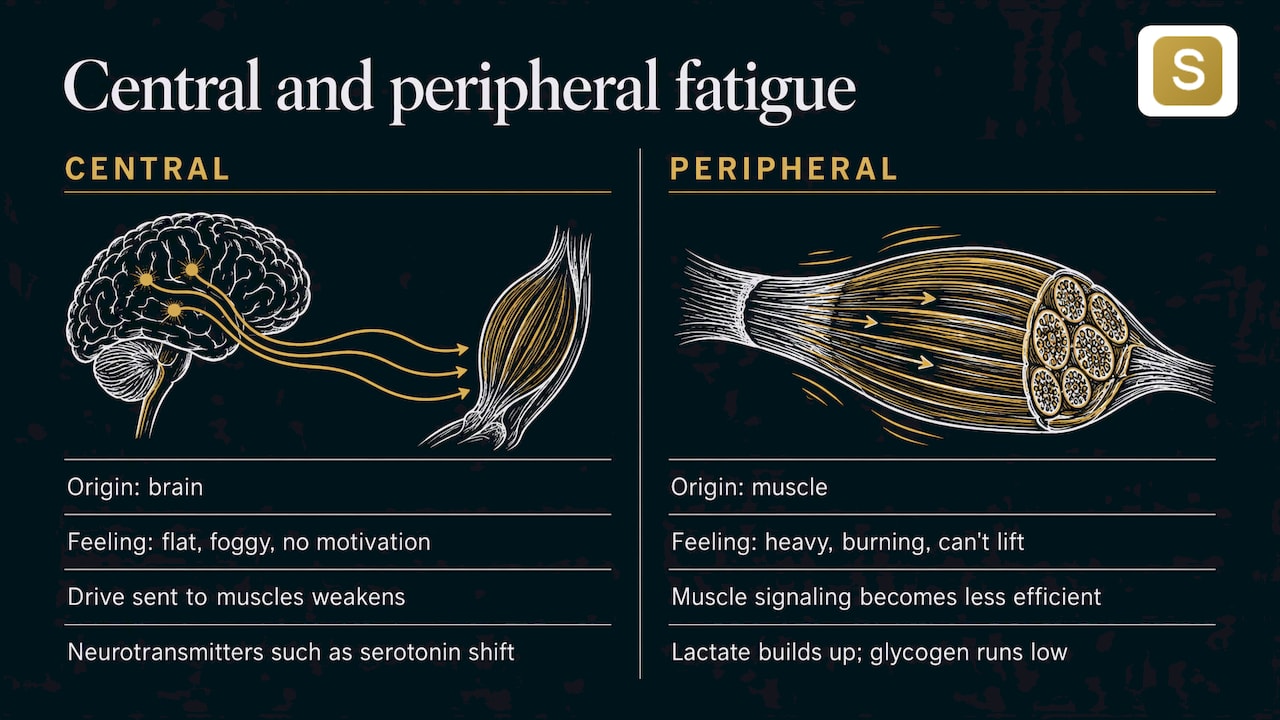
Researchers split exercise fatigue into two types. Central fatigue starts in the brain, where the drive sent to the muscles weakens and neurotransmitters such as serotonin shift. Peripheral fatigue happens in the muscle itself, where signaling becomes less efficient and by-products such as lactate and inorganic phosphates build up while glycogen, the stored carbohydrate your muscles burn, runs low. Both are most pronounced in high-intensity work.
That matters because the two types feel different. Peripheral fatigue is the heavy, burning, can’t-lift-another-rep feeling. Central fatigue is the flat, foggy, no-motivation feeling. The same review notes that sleep loss, anxiety and stress change how hard effort feels, so your mood and life load count as much as your training log.
Why the same workout can feel different
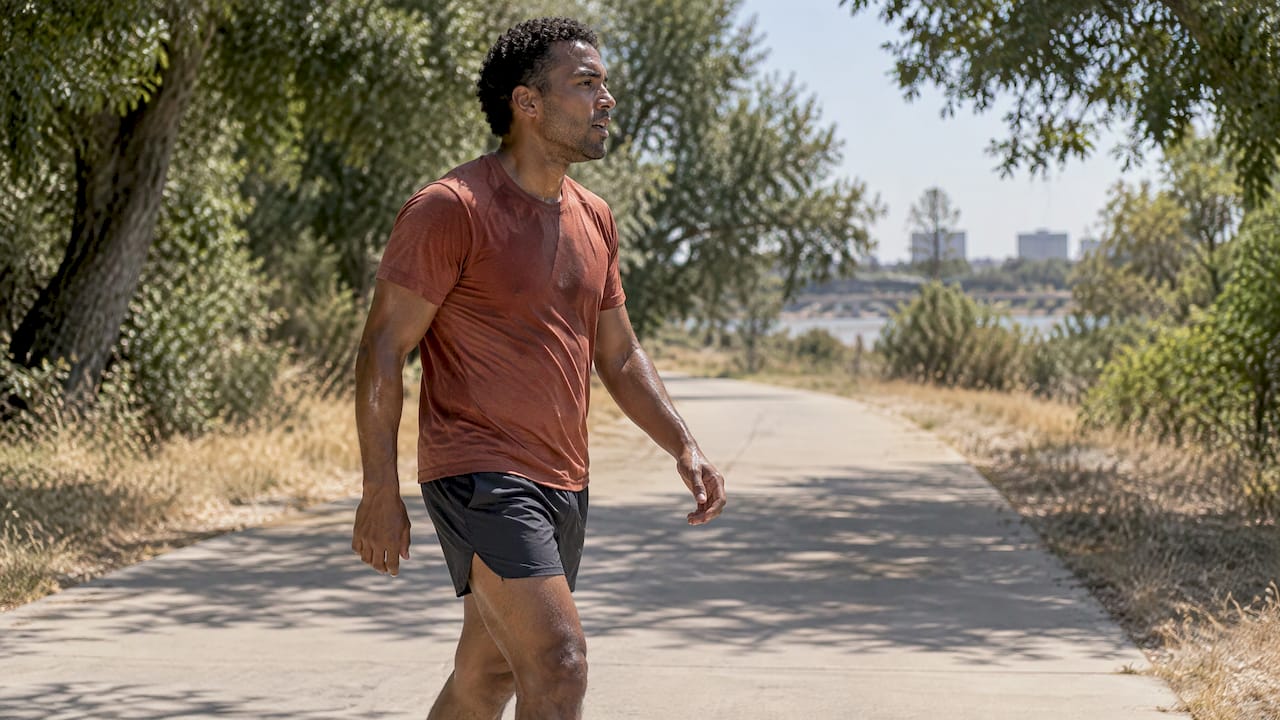
A small study of endurance-trained subjects found that exhaustion came after about 5.6 minutes at maximum effort in the heat, versus about 24.9 minutes at 80% effort in cool conditions. At or near maximum effort, metabolic factors such as acidity and lactate dominate. At moderate-hard effort, heat becomes the bigger limiter. If a run that felt easy in March flattens you in August, heat is a likely reason, not a loss of fitness.
Normal tiredness versus poor recovery
The American Family Physician review of fatigue in adults describes physiologic fatigue as the normal result of burning more energy than you restore, and says appropriate rest relieves it. The same review warns that prolonged, intense exercise that drains energy stores without enough recovery can leave you fatigued.
Here is a practical way to compare the two.
| Normal post-workout fatigue | Possible poor recovery | |
|---|---|---|
| Timing | Hours to a day or two after a hard session | Lingers for days or weeks |
| Rest response | Better after a night or two of good sleep | Little improvement with usual rest |
| Performance | Back to normal next session | Weights or paces you handled before now feel impossible |
| Mood and sleep | Unchanged, or pleasantly sleepy | Irritability, low mood, trouble sleeping |
| Body | Ordinary muscle soreness | Heavy limbs, repeated injuries, frequent colds |
Signs you are overreaching
MedlinePlus lists the symptoms of too much exercise: being unable to perform at your usual level, needing longer to recover, feeling tired, depressed or irritable, trouble sleeping, sore muscles or heavy limbs, overuse injuries, lost motivation, more colds, weight loss and anxiety. If several of these show up together, the workout is probably not the only problem.
Overtraining syndrome is the extreme end. The American Academy of Pediatrics describes it as an accumulation of stress from training and other sources that causes a persistent drop in performance requiring weeks or months of rest. Two points from that report apply to adults too. Doctors diagnose it only after excluding anemia, infection, endocrine disorders and mental illness. And the stress behind it comes from many places, including sleep problems and financial pressure, not just the gym.
The usual causes, in order of how often to check them
1. Training load that rose too fast
The same AAP report recommends increasing training load by no more than 10% to 20% per week. It was written for young athletes, but the logic holds for anyone coming back from a break or starting a new program: adding a fourth session, heavier weights and longer runs in the same week is a recipe for a crash.
Use the talk test to keep most sessions in a sustainable range. The American Heart Association says to work hard enough that you breathe harder but can still hold a conversation. It also suggests 5 to 10 minutes of slow walking before and after aerobic or strength work to warm up and cool down.
2. Not enough sleep
American Family Physician notes that nearly 30% of U.S. adults report fewer than seven hours of sleep a night. Sleep is when recovery happens. MedlinePlus advises at least 8 hours a night for people who exercise a lot. If you train hard on six hours of sleep, you are borrowing against tomorrow.
3. Too few calories or too little fluid
MedlinePlus says to eat enough calories for your exercise level and drink enough fluids. For hydration, the National Athletic Trainers’ Association says to avoid losing more than 2% of your body mass as sweat during exercise. Weigh yourself before and after a long, sweaty session: a 180-pound person who loses more than about 3.6 pounds is past that mark. The same statement advises replacing sweat sodium with sodium-containing fluids and foods, and allowing 2 to 3 hours between sessions for food, fluids and electrolytes to be digested and absorbed.
4. Heat
Heat effects accumulate. The athletic trainers’ statement says to sleep at least 7 hours in a cool environment and to rest in cool conditions even on off days. MedlinePlus also says to avoid exercising in extreme heat or cold.
5. No real rest days
MedlinePlus recommends resting at least 6 hours between exercise periods and taking one full day off every week. A rest day is part of the program, not a lapse in it.
6. Stress, mood and life load
If work, family or money are weighing on you, your body reads that as part of your total load. The research on central fatigue points the same way: anxiety and stress change how effortful training feels. A plan that ignores that is a plan on paper only.
A seven-day reset that fits most people
If you recognize yourself in the poor-recovery column above, start here.
- Cut back. MedlinePlus advises reducing exercise or resting completely for 1 to 2 weeks, then seeing a provider if you are still tired.
- Fix sleep first. Aim for the full 7 to 8 hours and a cool bedroom.
- Eat for the work you do. Do not diet hard while training hard. Under-eating is one of the quickest ways to feel drained.
- Hydrate across the day, not just around the workout, and replace sodium after heavy sweating.
- Return gradually. Add no more than 10% to 20% of load per week.
- Keep one full rest day every week.
- Write it down. Note sleep hours, workouts, mood and energy. A two-week log is the most useful thing to bring to a physician.
If you want a second checklist with red flags, this recovery checklist for tired-after-workout days covers the same ground from a coaching angle.
Red flags: when to stop and get care
Some fatigue is not about training at all, and a few symptoms need action the same day.
The American Heart Association lists these warning signs of working too hard: chest pressure, squeezing or burning under the breastbone, lightheadedness, dizziness or confusion, feeling extremely tired after activity, unusual or extreme shortness of breath, and a fast or uneven heartbeat. Its advice is to stop and call your healthcare professional right away. If chest pain lasts more than a few minutes, or comes with nausea and sweating, call 911.
Heat illness is a separate emergency. The athletic trainers’ position statement describes exertional heat stroke as central nervous system dysfunction, such as confusion, together with a core temperature above 105°F (40.5°C). Heat exhaustion that does not improve quickly with cooling, within 30 minutes of treatment, should be handed to a physician.
Also watch the calendar. MedlinePlus says that fatigue lasting weeks warrants a call to your health care provider. American Family Physician defines chronic fatigue as lasting six months or longer, and notes that a prolonged worsening after small increases in activity, called postexertional malaise, is what separates certain chronic conditions from simple overexertion.
When rest and habits are not enough
If you have cut back, slept, eaten and hydrated properly for a couple of weeks and still feel flat, the question changes from “how do I train better?” to “what else is going on?” Physicians look at it in a deliberate order: the normal physiologic causes first, then the medical ones. The AAP report lists the medical ones to rule out: anemia, infection, endocrine disorders and mental health conditions.
That is where measurement helps. At Strong Health, every treatment is prescribed and monitored by a board-certified physician, after an in-person or telehealth evaluation and a comprehensive biomarker lab panel. Our diagnostics include hormone testing, VO2 max testing, resting metabolic rate (RMR) testing and DEXA body composition scans. These show how fit you are, how much muscle you carry, how many calories you burn at rest and where your hormones sit. A DEXA scan, for instance, tells you whether your lean mass is holding up under your training. Our guide to low muscle mass explains why that number matters.
Why start with a physician rather than guesswork? Because the symptoms overlap. Low energy, poor sleep, low mood and slow recovery show up in overtraining, hormonal imbalance and under-fueling alike. Data lets the treatment match the cause.
Where peptide therapy fits
For adults who have fixed the basics and still want to improve recovery, energy or body composition, peptide therapy is one option a physician can consider. Peptides are short chains of amino acids that act as signals in the body. Whether they suit you depends on your labs, your goals and your history, which is why we prescribe them only after an evaluation.
To read more before you decide, start with our guides on recovery peptides and peptides for energy and fatigue, which lay out the evidence and the risks.
How Strong Health supports recovery goals
Our physician-supervised peptide therapy covers healing and recovery, muscle growth, weight and belly fat, sleep and libido. Each plan is built from your baseline labs and your goals. We follow up by telehealth and in-person assessments so your physician can adjust dosing as your biomarkers change, and we use pharmacy-grade peptides with transparent, evidence-based protocols.

If you train hard and recovery has stalled, you can start with an evaluation and a lab panel through our peptide therapy page. Your physician will tell you what the numbers say and what to do next.
How to prevent post-workout fatigue going forward
- Progress slowly. Keep weekly increases within 10% to 20%.
- Match intensity to the goal. Most sessions should pass the talk test. Save all-out efforts for one or two days a week.
- Fuel before and after. Eat enough overall, and do not train hard on an empty tank.
- Weigh in around long sessions to track sweat loss against the 2% line.
- Protect sleep like a training session.
- Schedule easy weeks. Every few weeks, cut volume to let the body catch up.
- Track the trend. One bad day is noise. Three bad weeks is data.
- Retest if you are a long-term lifter. Body composition, hormones and fitness markers shift over years, and a repeat panel shows whether your plan still fits your body.
FAQ
Is it normal to feel exhausted after working out?
Yes, tiredness after a hard session is a normal response and typically eases with rest, food, fluids and sleep. It is worth a closer look if it lasts for weeks, if your performance falls, or if it comes with low mood, poor sleep or frequent illness.
Why do I feel more tired after exercise than before?
Common reasons are a sudden jump in training load, too little sleep, too few calories, dehydration and heat. A glycogen shortfall can also leave you drained, especially after high-intensity work. If none of these fit, a physician can check for medical causes.
How long should recovery take after a hard workout?
Most people feel back to normal within a day or two. MedlinePlus advises at least 6 hours between exercise sessions and one full rest day a week. If you are still depleted after 1 to 2 weeks of reduced training, talk with a provider.
When is fatigue after exercise an emergency?
Call 911 for chest pain lasting more than a few minutes, especially with nausea and sweating, or for confusion after exercising in heat. Stop exercising and contact a healthcare professional right away for dizziness, unusual breathlessness, an uneven heartbeat or extreme tiredness after activity.
Can blood tests explain poor exercise recovery?
They can help when your history points to a cause, such as a hormonal imbalance or a nutrient problem. At Strong Health, a physician reviews your baseline biomarker panel alongside your symptoms, training and goals, so the results are read in context.
Sources
- [1]Central and Peripheral Fatigue in Physical Exercise (IJERPH, 2022)
- [2]Fatigue During High-Intensity Endurance Exercise (JSCR, 2014)
- [3]Fatigue in Adults: Evaluation and Management (American Family Physician, 2023)
- [4]Are you getting too much exercise? (MedlinePlus)
- [5]Overuse Injuries, Overtraining, and Burnout in Young Athletes (AAP, Pediatrics, 2024)
- [6]National Athletic Trainers’ Association Position Statement: Exertional Heat Illnesses (2015)
- [7]Develop a Physical Activity Plan for You (American Heart Association)
Recommended
This content is for informational purposes only and does not constitute medical advice, diagnosis, or treatment. Always seek the advice of your physician or other qualified health provider with any questions you may have regarding a medical condition. Never disregard professional medical advice or delay in seeking it because of something you have read on this website. Authorship and review information are shown where recorded; an editorial update is not a new medical review.
More Health Guides
Looking for care? View Strong Health locations and visit options.
Get Your Free Assessment
Take our 5-minute assessment to see if testosterone therapy may be right for you. Reviewed by a licensed physician within 24 hours.
Start Free Assessment